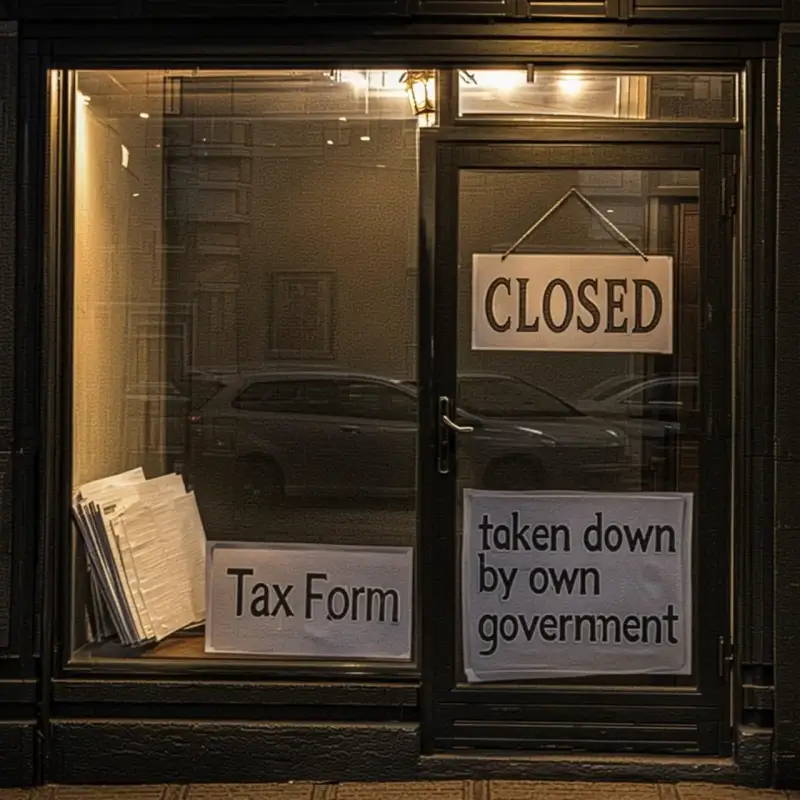
Impact on SME Entrepreneurs and Self-Employed in the Childcare Benefits Scandal: Disproportionate Harm, Inadequate Compensation and Institutional Failure

The benefits scandal hit SME owners and self-employed workers disproportionately hard: more complex finances, their role as childminder agencies and overrepresentation in groups with a migration background made them vulnerable. The CAF classification system worked as a mechanism of collective punishment with a reversed presumption of innocence. This investigation maps the damage and the inadequate compensation.
Document Details
| Field | Content |
|---|---|
| Investigation | Impact on SME Entrepreneurs in the Childcare Benefits Scandal |
| Period | 2004,2026 |
| Sources | Public sources: Wikipedia NL/EN, Council of State, Parliamentary documents, Statistics Netherlands (CBS), Data Protection Authority, National Ombudsman, Follow the Money |
Summary
SME entrepreneurs and self-employed workers were disproportionately affected by the childcare benefits scandal. Their more complex financial situations, their role as childcare agencies (gastouderbureaus) and their overrepresentation in groups with a migration background made them particularly vulnerable to the institutional failures of the Tax and Customs Administration. The CAF classification system functioned as a collective punishment mechanism with a reversed presumption of innocence. The tax chain, from benefits termination to bankruptcy, operated as an unstoppable destructive mechanism. Compensation schemes covered only 15.31% of actual damages. For entrepreneurs, compensation was even more dramatic: a 2025 court ruling shows a ratio of only 4.6%.
Part 1: Disproportionate Vulnerability of SME Entrepreneurs
1.1 Complexity of Entrepreneurial Finances
SME entrepreneurs and self-employed workers naturally have more complex financial situations than salaried employees:
- Fluctuating income per month and per year
- Business and personal finances that are partially intertwined
- Variable childcare benefit based on estimated income
- Dual exposure: as both a parent and a childcare agency owner
The Tax Administration did not account for this complexity when assessing signals. The system was designed for simple salaried employment patterns and structurally failed when confronted with alternative but legitimate financial structures.
1.2 Role as Childcare Agencies (Gastouderbureaus)
A big proportion of affected SME entrepreneurs operated as gastouderbureaus (host parent agencies). This dual role, both receiving and passing on childcare benefits, made them particularly vulnerable:
- The Tax Administration structurally suspected gastouderbureaus of fraud without specific evidence
- The CAF system classified agencies as high-risk based on group characteristics
- Upon a signal, both business and personal benefits were terminated simultaneously
1.3 Overrepresentation of Migration Background
According to Statistics Netherlands (CBS) data, 71% of affected households had a migration background. Among SME entrepreneurs in the childcare sector, this percentage is expected to be even higher, given the overrepresentation of entrepreneurs with a migration background in this specific market.
Part 2: The CAF Classification System as a Collective Punishment Mechanism
2.1 The 80/20 Approach
The CAF classification system (Centraal Aanmeldings- en Fraudebestrijdingssysteem / Central Registration and Fraud Prevention System) operated with a so-called 80/20 approach:
- Upon classification as “suspected fraud,” the burden of proof was reversed
- Citizens had to demonstrate that they had not committed fraud
- The presumption of innocence did not apply; the presumption of guilt did
This reversal of the presumption of innocence contravenes Article 6 of the European Convention on Human Rights (ECHR) and the fundamental principles of the rule of law.
2.2 Group Characteristics Instead of Individual Evidence
CAF classifications were based on group characteristics rather than individual investigation:
- Registration in the FSV without verification
- Migration background as a risk indicator
- Dual nationality as a suspected fraud marker
- Lower or variable income as a signal
The result was a system of collective punishment: anyone meeting certain group characteristics was treated as a fraudster until proven otherwise.
Part 3: The Tax Chain, From Benefits to Bankruptcy
3.1 The Mechanism
The tax chain describes the cascade effect by which a benefits termination led to complete financial ruin:
Benefits Termination → Tax Assessments → Fines → Collection → Debt Restructuring (WSNP) → Bankruptcy → Emigration
Each step in this chain amplified the next:
- Benefits Termination: Immediate loss of income, often retroactively for months or years
- Tax Assessments: The Tax Administration issued assessments based on the suspected fraud
- Fines: Assessments were followed by penalties of 100% or more
- Collection: The Tax Administration enforced collection, including seizures of bank accounts
- WSNP: Debt restructuring process with years of financial guardianship
- Bankruptcy: For entrepreneurs, bankruptcy of business operations
- Emigration: In despair, affected individuals left the country
3.2 Irreversibility
The tax chain was in practice irreversible. Even after establishing wrongful treatment:
- Fines were not always fully waived
- Bankruptcies were not reversed
- BKR registrations remained visible in credit records
- Emotional and health damage was irreversible
Part 4: Compensation, Inadequate and Unequal
4.1 Coverage Rate: 15.31% of Actual Damages
Research shows that compensation schemes cover only 15.31% of actual damages. This percentage includes:
- Direct financial loss (benefits to be repaid)
- Fines and collection costs
- Loss of income due to termination
- Health damage and emotional suffering
- Reputational damage and business loss
The gap between damages and compensation is structural, not incidental.
4.2 District Court of North Holland, 19 June 2025
A ruling by the Rechtbank Noord-Holland on 19 June 2025 illustrates the severity of inadequate compensation:
| Field | Amount |
|---|---|
| Claimed damages | €654,000 |
| Awarded compensation | €30,000 |
| Ratio | 4.6% |
This ruling shows that entrepreneurs who lost their entire business and income due to institutional government failure receive a fraction of their damages in practice.
4.3 CWS Policy Framework: Ranges and Burden of Proof
The Commissie Wijziging Systematiek (CWS) policy framework operates with ranges:
- Per parent: €2,000-€6,000
- Burden of proof: High, affected individuals must demonstrate the specific damages they have suffered
- Process: Lengthy and bureaucratic
The ranges were established without accounting for the specific situation of entrepreneurs, whose damages are often many times higher than those of private individuals.
4.4 International Comparison
The Netherlands is the only country where compensation is calculated per applicant rather than per individual. This means:
- Families with multiple affected children receive disproportionately little
- The methodology does not account for individual impact per person
- International standards for state liability are not met
Part 5: Institutional Responses
5.1 Council of State, Reflection Report November 2021
The Council of State published a reflection report in November 2021 containing:
- 35 action points for improving administrative justice
- Apologies for the Council’s role in failing to intervene in time
- Acknowledgment that the judiciary had provided insufficient protection
5.2 National Ombudsman
The National Ombudsman repeatedly criticised:
- The inadequate compensation schemes
- The slow processing of damage claims
- The lack of individual-level apologies and recognition
5.3 FSV: 180,000 Citizens Registered as Fraudsters Without Verification
The FSV registered 180,000 citizens as fraudsters without any form of verification. This registration had wide consequences:
- Automatic rejection of benefits applications
- Signal effect to other government agencies
- Stigmatisation and exclusion
Statistical Summary
| Indicator | Value |
|---|---|
| Households with migration background among those affected | 71% (CBS) |
| Citizens registered in FSV without verification | 180,000 |
| Compensation coverage rate | 15.31% |
| District Court NH ratio for entrepreneur (June 2025) | 4.6% |
| CWS range per parent | €2,000-€6,000 |
| Council of State action points | 35 |
Source References
- Wikipedia NL/EN, articles on the childcare benefits scandal, consulted 2024,2026.
- Council of State (Raad van State), Reflection Report, November 2021.
- Parliamentary documents, Tweede Kamer documents on the childcare benefits scandal, various years.
- Statistics Netherlands (CBS), data on migration background of affected households.
- Data Protection Authority (Autoriteit Persoonsgegevens), reports on the FSV and data processing.
- National Ombudsman, reports and recommendations on compensation schemes.
- Follow the Money, investigative journalism on the childcare benefits scandal.
- District Court of North Holland (Rechtbank Noord-Holland), ruling of 19 June 2025.
- Committee on System Change (Commissie Wijziging Systematiek / CWS), policy framework on compensation.
Open Questions
- How many SME entrepreneurs went bankrupt as a direct result of the childcare benefits scandal?
- What is the total amount of uncompensated damages among entrepreneurs?
- Why was the 80/20 approach never subjected to a legality review?
- How many gastouderbureau owners were affected versus regular benefits recipients?
- Has the District Court of North Holland ruling of June 2025 been upheld on appeal?
Investigation prepared on the basis of public sources. All statistics and quotations have been verified against their original sources.
Frequently asked questions
What percentage of affected households had a migration background?
According to Statistics Netherlands (CBS) data, 71 percent of affected households had a migration background. Among SME entrepreneurs in the childcare sector this percentage was presumably even higher, given the overrepresentation of entrepreneurs with a migration background in this market. The CAF used migration background and dual nationality as risk indicators.
How many citizens were registered in the FSV as fraudsters?
Without any form of verification, the FSV registered 180,000 citizens as fraudsters. This registration led to automatic rejection of benefits applications, signal effects towards other government agencies and stigmatisation and exclusion. The registration was based on group characteristics rather than individual investigation.
What was the outcome of the court ruling of 19 June 2025 for an entrepreneur?
The Rechtbank Noord-Holland awarded on 19 June 2025 only €30,000 of €654,000 in claimed damages, a ratio of 4.6 percent. As a result, entrepreneurs who lost their entire business and income receive only a fraction of their damages in practice. Compensation schemes cover on average just 15 to 31 percent of actual damages.
What conclusions did the Council of State draw in its November 2021 reflection report?
The Council of State published a reflection report in November 2021 containing 35 action points for improving administrative justice. The Council offered apologies for its role in failing to intervene in time and acknowledged that the judiciary had provided insufficient protection to victims.
Read also
- The butcher as gatekeeper: the debate — why the cabinet keeps the prosecution service out
- The accountability matrix 2017-2026 — who knew what about the data vault, and who is still there
- The corrupt agenda: a reconstruction — the full timeline, 2019-2026
- 64 million files out of sight — the discovery and the nine-month delay
Sources
- OpenBrief investigation based on parliamentary papers and reports; sources in the text