John van der Velden
Introduction
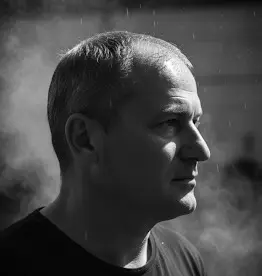
John van der Velden is an independent researcher working at the intersection of administrative systems and institutional accountability, with a focus on public record analysis. He is based in Croatia and personally affected by the Dutch childcare benefits scandal (toeslagenaffaire).
His work focuses on documenting structural failures within governance frameworks, with emphasis on verifiable evidence and traceable sources.
Archival clarity is the standard.
Personal involvement
This work is not abstract. John is himself one of those affected by the childcare benefits scandal (toeslagenaffaire) — openness about that belongs to the methodology, not to the motivation.
- 2008–2015 — childminding agency and a business at a holiday park in Colijnsplaat (Zeeland)
- 2016 — departure to Croatia, following fraud accusations by the Belastingdienst and a warning at the childminding agency about impending removal of children from the family
- 2017 — upon passport renewal, an unexpected €60,000 claim; a fully automated algorithm-generated estimate without human review, later shown to be incorrect (see the RAM investigation)
- 2016–present — based in Croatia; years of uncertainty over legal status and no ability to visit family in the Netherlands
- 2021 — formal recognition as a victim of the childcare benefits scandal
- 2024–present — representing himself (pro se) against the Dutch State (District Court of Rotterdam)
- Member of the Belangengroep Gedupeerde Ondernemers Toeslagen (Interest Group for Victimized Entrepreneurs in the Benefits Affair)
That families were selected for investigation without concrete cause is not an isolated phenomenon. The investigation into the PwC working document on the FSV and racism (in Dutch) documents how ethnicity, nationality and surname functioned as primary selection criteria within the Belastingdienst. That this pattern was structural rather than incidental is confirmed by the finding that more than 50 of the 68 Belastingdienst algorithms were assessed as unlawful and discriminatory by the Dutch Data Protection Authority — documented in Government algorithms, Belastingdienst and rights violations (in Dutch).
The personal involvement is the occasion of the research, not the method. Sources and conclusions are treated as in any independent investigation: verifiable and separated from experience.
Background
John van der Velden previously worked as a network and security specialist, focusing on systems architecture and infrastructure integrity. Process optimisation across technical and organisational environments was part of the role.
His work included analysing and improving operational workflows and decision structures. System-level efficiency was the target in IT infrastructure, business and administrative processes.
He has been based in Croatia for the past decade — a direct consequence of the childcare benefits scandal (see Personal involvement above).
This transition marked a shift from designing systems to critically examining them.
His current work focuses on institutional processes and accountability. The real-world consequences of administrative systems drive the research, combining technical analysis with structured investigative documentation.
Approach
All investigations rely on primary documentation, cross-referenced datasets and structured analysis. Claims are not presented without a traceable source or clearly defined analytical basis.
The work is non-speculative and avoids narrative distortion.
Areas of Work
- Administrative systems and decision-making processes
- Housing, displacement and access inequality
- Legal and procedural documentation of systemic structures
- Field-based observation and environmental context
Field Observation & Photography
In parallel with his research, John maintains an extensive photographic archive documenting environments and infrastructure. Lived conditions are part of the record.
With over 9,000 published images and 21 million+ views as a Google contributor, this visual record functions as a contextual layer to written investigations.
Photography is used as documentation, not illustration.
→ Portfolio: https://photographbyjohn.com/portfolio/
Methodology
The Open Brief methodology is based on:
- source-first documentation
- verifiable references with direct links to original parliamentary documents, reports or source files
- structured presentation of findings
- explicit separation between fact, interpretation and uncertainty — interpretations are labelled as such (“The parliamentary records show X; my interpretation of this is Y”)
- right of reply: where possible, the official account is represented correctly before it is criticised
Strong claims (“systematic”, “deliberate”, “corrupt”) are used only where they can be substantiated; otherwise they are marked as hypothesis or interpretation. Where information cannot be fully verified, this is explicitly indicated.
Note on language and AI
Due to dyslexia, my texts are corrected with AI assistance for language, spelling and readability. The research, sourcing, documentation and conclusions are entirely my own. AI assists with language, not with substance — the evidence and analysis remain the author’s.
Research Perspective
His work is shaped by a combination of technical systems thinking and field-based observation.
Particular attention is given to:
- the accuracy of public and political reporting
- the gap between official narratives and documented evidence
- the role of source verification in an environment with increasing misinformation
Investigations are conducted with an emphasis on traceability, cross-referencing and source transparency.
Position on Information Integrity
In the current media environment, where information is often fragmented or influenced by narrative framing, the focus is on:
- verifiable documentation
- source-backed claims
- clear distinction between fact, interpretation and uncertainty
Reliable information, in this context, is not assumed. It is established through structured analysis.
Editorial Position
Open Brief Network does not publish opinion as fact. All publications are structured around evidence, with analysis clearly separated from documented material.
The aim is not narrative impact, but record integrity.
Author Note
The work reflects a balance between independent field observation and structured investigative analysis.
The intent is not visibility, but accuracy.
External Work
- Photograph portfolio: photographbyjohn.com
- Google Maps Local Guide: 9,000+ published images, 21 million+ views